Most buyers come to us with a budget in mind. Many of them are missing real cost lines. Not because custom plush is expensive, but because they’ve budgeted for unit cost only. Sampling, packaging, and freight never made it into the spreadsheet.
That’s not the buyer’s fault. Pricing guides online give vague ranges and stop there. Nobody shows you what’s inside the number.
We’ve been manufacturing custom plush at our Dongguan factory since 1998. In this guide, we’ll break down every cost component, from the sampling fee to sea freight, using the same numbers we use when we quote real orders. By the end, you’ll be able to budget a custom plush project within a margin you can defend to your finance team.
Key Takeaways
- Custom plush toys cost $2–$25/unit at bulk, depending on size and order volume. A 500-unit order of a 10-inch plush typically runs $5–$7/unit ($2,500–$3,500 total) based on our factory production data.
- Sampling costs $150–$300 and is credited back on confirmed bulk orders of 3,000+ units.
- The single biggest pricing lever is order quantity: moving from 500 to 2,000 units cuts per-unit cost by 30–40%.
What Does Custom Plush Cost?
As of 2026, our factory data puts a standard 10-inch custom plush at $5–$7 per unit for a 500-unit order, a total production investment of $2,500–$3,500 before shipping. The same plush at 2,000 units drops to $3–$5 per unit. Size and quantity drive the price more than any other factors.
Here’s how unit pricing typically breaks down by size at a 1,000-unit order quantity:
Unit Price by Plush Size (1,000-Unit Order)
8-inch
12-inch
18-inch
24-inch
~$3
~$6
~$10
~$15
$0
$5
$10
$15
A few things to know about what these numbers include. A factory-direct unit price covers production, standard polybag packaging, and in-house QC inspection. It doesn’t include the sampling fee, custom retail packaging, third-party safety testing, or freight. We’ll cover each of those below — they’re exactly the items that catch buyers off guard.
Design complexity shifts these ranges too. A simple two-color animal with embroidered eyes sits at the bottom of each range. A multi-panel character with printed fabric, accessories, and appliqué details can add 20–50% to the unit cost. If you’re working from your own design files, our pattern team will flag complexity cost drivers at the quote stage — before you’ve committed to anything.
For a deeper look at how quantity affects what you’ll pay, see our guide on how minimum order quantities actually work. And for size-by-size price detail, we keep a focused breakdown of how much custom plush costs at each size tier.
What’s Driving the Price? The 5 Cost Components
Every custom plush quote we issue is built from five components: labor, materials, QC and safety testing, packaging, and setup amortization. In 2026, labor is the largest share at 40–50% of unit cost. Plush is still a hand-assembled product, and no machine sews a curved seam like a person does.
Here’s the actual cost structure from our factory floor. We’re publishing this because almost nobody else will — most “manufacturers” you’ll find online are trading companies that don’t know these numbers, because they’ve never run a production line.
Where Your Money Goes: Cost per Unit
Labor — 45%
Materials — 30%
QC & Safety Testing — 10%
Packaging — 10%
Setup Amortization — 5%
| Cost Component | Share of Unit Cost | What It Covers |
|---|---|---|
| Labor | 40–50% | Cutting, sewing, stuffing, finishing, inspection |
| Materials | 25–35% | Fabric, filling, decoration, trims |
| QC & Safety Testing | 8–12% | In-line and final inspection (third-party lab tests quoted separately) |
| Packaging | 8–15% | Polybag ($0.10–$0.20/unit) up to custom retail box ($0.50–$1.50/unit) |
| Setup Amortization | 3–7% | Pattern-making, cutting dies, embroidery digitization |
Labor (40–50%). Cutting, sewing, stuffing, finishing, and final inspection: every step runs through human hands. Complex designs with more panels mean more sewing minutes per unit, which is why complexity raises price faster than size does.
Materials (25–35%). Fabric type, filling density, and decoration method all matter here. Standard short-pile plush keeps costs predictable. Upgrades like organic cotton or recycled rPET raise the baseline. For recycled-content claims, budget time and money for documentation, material traceability, and buyer-specific approval, not just the fabric price. Embroidered details cost less than you’d expect; printed fabric panels cost more.
QC and safety testing (8–12%). In-line inspection happens during production, and a final random inspection happens before packing. Third-party testing for EN71, ASTM F963, or CPSIA is quoted separately — typically $150–$400 per standard per batch; the full compliance picture is in our plush toy safety standards guide. Buyers who want independent eyes on finished goods can also book a pre-shipment AQL inspection, which is a separate service from lab testing.
Packaging (8–15%). Here’s where budgets quietly break. A simple polybag costs far less than a custom printed retail box. Since 1998, packaging has been one of the most common cost shocks we see, because many buyers budget for the toy but forget the retail-ready presentation.
Setup amortization (3–7%). Pattern-making, cutting dies, and embroidery digitization are one-time costs spread across your order. This is the component that collapses as quantity rises, which leads to the next question.
Why Does Unit Price Drop at Higher Quantities?
The factory setup for 500 units and 5,000 units uses the same pattern work, sample review, material sourcing, cutting setup, and line preparation. Spread that fixed work over more units and the unit price drops. That is the core mechanism behind every quantity discount we quote.
Two forces compound this. First, the fixed-cost dilution above. Second, material economics: when we buy fabric for a 5,000-unit run, we’re ordering full rolls at better yardage rates, with less cutting waste per unit. Both savings flow into your unit price.
This is why we always tell buyers weighing 500 versus 1,000 units: get both quotes. The percentage drop is often large enough to change the decision. Moving from 500 to 2,000 units typically reduces per-unit cost by 30–40% based on our production data. Sometimes that’s enough that the larger order costs less per dollar of retail value than the smaller one.
Does that mean you should always order more? No. Overstock is a real cost too. The right quantity balances unit economics against your realistic sell-through. We’d rather quote you honestly at 500 units than push you into 2,000 you can’t move.
How Much Does the Sample Cost — and Is It Refundable?
A custom plush sample at our factory costs $150–$300 depending on design complexity, and covers pattern-making, material sourcing, and revision rounds. Sampling takes 7–14 days. When your confirmed bulk order reaches 3,000 units or more, the sampling fee is credited toward your production invoice, so the net cost of sampling becomes zero.
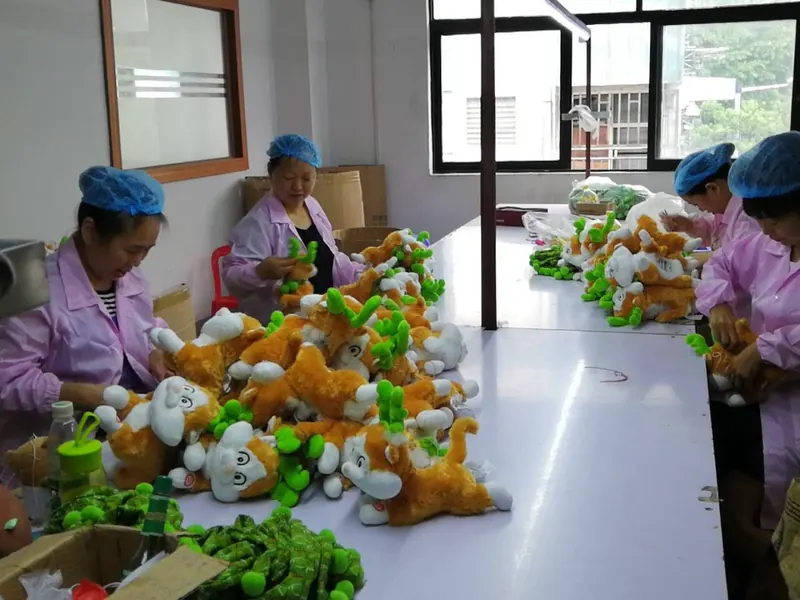
What you’re actually paying for in that fee: a pattern-maker converts your 2D design file into a 3D sewing pattern, the materials team sources your specified fabrics in small quantities (which costs more per yard than bulk), and a senior sewer assembles the prototype by hand. It’s real work by the most experienced people on the floor.
Standard practice across the industry includes 2–3 revision rounds within the sample fee. Additional rounds typically run $30–$80 each. Most projects we run need one revision — usually proportions or color matching against a screen design that looks different in fabric.
One honest note on “refundable”: it’s a credit against your bulk invoice, not a cash refund. If you sample with us and order elsewhere, the fee isn’t returned. Every legitimate factory we know works the same way: the fee filters out non-serious inquiries and compensates real labor.
The full sampling workflow, including what files we need from you, is covered in our complete sample process guide.
Factory Direct vs. Trading Company: What’s the Real Cost Difference?
A trading company buys from a factory and adds its own margin before quoting you. Sometimes that service is useful if you need sourcing support across several product categories. But if you already know you need plush, factory-direct quoting keeps the cost structure visible: fabric, sewing labor, QC, packaging, testing, and freight are separated instead of hidden in one markup.
We can publish this comparison because we own our production facility. Most companies ranking for “custom plush manufacturer” cannot: they’re sourcing agents reselling factory capacity, and showing you this math would expose their margin.
Total Order Cost: Factory Direct vs. Trading Company
Factory direct
Trading company
$12K
$9K
$6K
$3K
$0
$2,750
$3,750
$4,500
$6,000
$8,000
$10,800
500 units
1,000 units
2,000 units
The markup isn’t the whole story. Working through a middleman also costs you things that don’t show up on the invoice: direct access to the production line when a QC question comes up, the ability to talk to the pattern-maker about your design, and an honest answer about what’s feasible, because the agent quoting you may not actually know.
How do you tell the difference? Ask three questions. Where exactly is your factory, and can I visit or video-call the floor? Who owns the facility? Can you show production photos of orders similar to mine, taken at your own factory? A factory answers all three in one email. A trading company gets vague on at least one.
Our full checklist is in how to verify a plush manufacturer’s credentials.
What About Shipping? The Cost Nobody Mentions
Sea freight from southern China usually takes 25–35 days, and it belongs in the calendar and landed-cost estimate, not as an afterthought. On bulky plush orders, carton volume can matter more than a small unit-price difference because stuffed toys are light but take space.
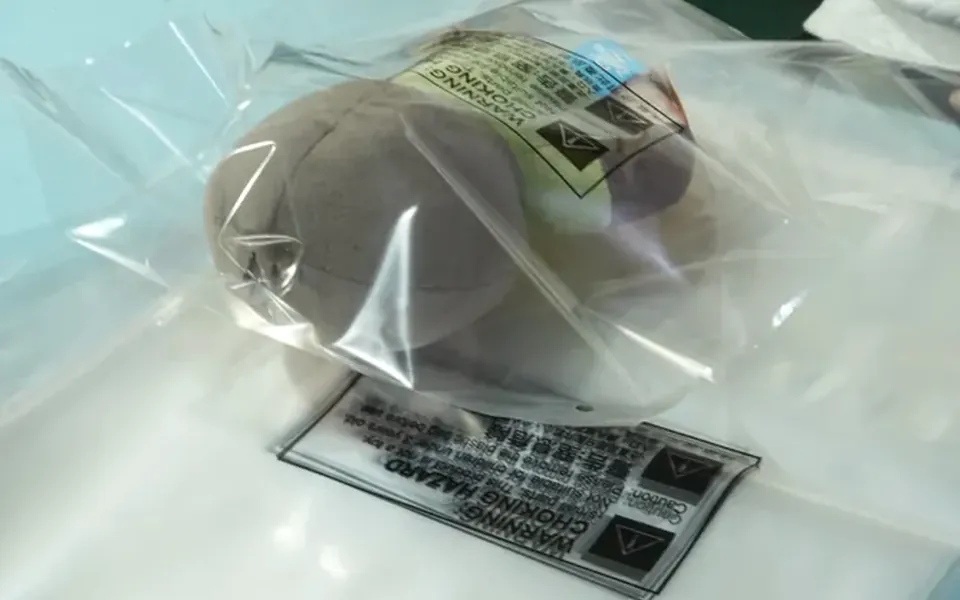
Plush has a freight quirk worth knowing: it’s light but bulky. Sea freight is billed by volume for low-density cargo, and stuffed toys are mostly air. The standard countermeasure is vacuum packing — compressing plush into sealed bags can cut carton volume by roughly half, which directly halves your volumetric freight cost. The plush recovers its shape after unpacking. We vacuum-pack by default on bulk orders unless the product design rules it out.
Air freight is the alternative when timelines are tight, but it is several times more expensive than sea on bulky plush. A conservative sea-freight planning window is 25–35 days, plus pickup, customs, and local delivery. If your launch date allows it, sea is usually the right call; in Q4 that calendar math gets unforgiving.
Two more line items for a complete landed-cost picture: import duties (which vary by market and product classification — your customs broker can quote this from our HS code) and last-mile delivery from port to your warehouse. Neither is large for plush, but both belong in the spreadsheet.
How Can You Lower Custom Plush Costs Without Cutting Quality?
The three highest-impact levers on unit cost are order quantity, design complexity, and packaging choice. Adjusting all three can reduce total landed cost by 25–40%, without the product feeling cheaper in a customer’s hands.
Here’s what we’ve watched work across thousands of orders since 1998, ranked by impact:
-
Increase order quantity. The most powerful lever, full stop. If your sell-through supports it, moving from 500 to 1,000+ units improves unit economics more than any design change.
-
Simplify the design. Fewer fabric panels means fewer sewing minutes. Embroidered details instead of separate accessory pieces. Two or three fabric colors instead of six. Our pattern team can usually find 10–15% of cost in a design review without changing how the product reads at retail.
-
Choose standard sizes. 8, 10, 12, and 16 inches use established patterns and packing configurations. Odd custom sizes mean custom everything.
-
Match packaging to the channel. Selling online? A polybag with an insert card does the job at $0.15. Retail shelf? Then the box earns its cost. Don’t pay for retail packaging on a product that ships in a mailer.
-
Consolidate SKUs into one production run. Three characters produced together share setup costs, fabric orders, and a freight container. Three separate orders pay everything three times.
One more lever sits upstream of all five: the product format itself. A plush keychain delivers branded units at a fraction of full-size cost, while a giant display piece is mostly a freight decision — the format choice often moves the budget more than any optimization within it. Different custom plush product types fit different jobs: a keychain, shelf plush, weighted plush, and giant display piece do not share the same cost structure.
What we’d push back on: cutting filling density, downgrading fabric below spec, or skipping safety testing. Those savings are real but small, and they’re exactly the corners that generate returns, bad reviews, and compliance risk. Cheap that customers can feel isn’t cheap.
Request a Factory-Direct Quote
Planning a custom plush project? Send us your design and target quantity, and we’ll return a factory-direct quote with every cost component itemized — unit price, sampling, packaging options, testing, and freight estimate. No vague ranges. Request a Factory-Direct Quote
Frequently Asked Questions
What is the minimum order quantity for custom plush toys?
Our standard MOQ is 500 units per design for most custom plush projects. Below that, the same pattern, sourcing, sewing setup, and QC work has to be spread across too few units, so per-unit cost rises sharply. For B2B buyers, 500 pieces is the practical starting point.
Is the sample fee refundable?
Yes, as a credit. Our sampling fee of $150–$300 is applied toward your bulk production invoice on confirmed orders of 3,000 units or more. It isn’t returned as cash if you don’t proceed. That’s standard practice across legitimate factories, since the fee covers real pattern-making and prototyping labor.
How long does custom plush production take?
Sampling takes 7–14 days from confirmed design files. Bulk production takes 25–45 days after sample approval, depending on quantity and complexity. Add 2–5 weeks of sea freight depending on destination. A typical project runs 10–14 weeks from first contact to delivered goods.
What payment terms are standard for custom plush orders?
Industry standard is a 50% deposit to begin bulk production, with the 50% balance due against the Bill of Lading or before shipment. The deposit funds raw material purchasing. Any factory asking for 100% upfront — or offering production with no deposit — deserves extra scrutiny.
Can I order custom plush using my own design files?
Yes. We accept vector files (AI, EPS, PDF), high-resolution raster images (300dpi+), and 3D model references. Our pattern-makers handle the 2D-to-3D conversion as part of the sampling fee. Multiple reference angles help; a front view plus side view is the practical minimum.
How does design complexity affect the price?
Simple designs with embroidered features sit at the bottom of each price range. Multi-panel characters with printed fabrics, accessories, or appliqué details add 20–50% to unit cost. Each additional fabric panel adds cutting and sewing time, and labor is 40–50% of what you pay.
Do quoted prices include safety testing?
In-house QC inspection is included in our unit price. Third-party certification testing (EN71 for the EU, ASTM F963 and CPSIA for the US) is quoted separately and typically costs $150–$400 per standard per batch. We arrange testing with accredited labs on your behalf.
What’s included in a factory-direct quote?
Our quotes itemize unit production cost, amortized setup, in-house QC, and standard polybag packaging. Sampling, custom retail packaging, third-party safety testing, and freight are listed as separate lines so you can see exactly what you’re paying for, and compare quotes accurately.
What Should You Take From This Pricing Guide?
Custom plush pricing isn’t mysterious once you can see inside the quote. To summarize what we’ve covered:
- Bulk unit cost: $2–$25 depending on size and quantity; $5–$7 for a typical 10-inch plush at 500 units
- Cost structure: labor 40–50%, materials 25–35%, QC 8–12%, packaging 8–15%, setup 3–7%
- Sampling: $150–$300, credited back on 3,000+ unit orders, 7–14 days
- Quantity is the biggest lever: 500 → 2,000 units cuts unit cost 30–40%
- Budget the forgotten lines: packaging, testing, and freight are where estimates break
- Factory direct makes the cost visible: labor, fabric, packaging, testing, and freight are separated instead of hidden in one markup
If you’re earlier in the process and still comparing suppliers, start with our complete guide to choosing a custom plush manufacturer. If you’re ready to put real numbers against your project, send us your design — sample work usually takes 7–14 days after the brief is clear.
About the Author
Kyo Lue — General Manager, The Plush Maker
Kyo works directly with The Plush Maker’s pattern room, sampling team, QC staff, and export team in Dongguan. His pricing advice comes from production decisions made on the factory floor: materials, stitching time, sample revisions, testing requirements, packing method, and realistic shipment terms.