Choosing a custom plush manufacturer starts before the quote. You first decide what kind of supplier you need, confirm whether the company actually controls production, and narrow a long list down to the few worth a paid sample. This guide covers that whole journey from a factory manager’s point of view.
The Plush Maker is an owned plush factory in Dongguan, China, manufacturing custom plush since 1998 with capacity of roughly 300,000 units per month. We’re a candidate in this process, not a neutral referee, so every check we recommend below is one we’re prepared to pass ourselves. For what production involves once you’ve chosen, see the complete B2B manufacturing guide.
Key Takeaways
- Decide the supplier type first: factory-direct, trading company, sourcing agent, or local maker. The best choice depends on whether you need one plush product or a consolidated multi-category shipment.
- Shortlist with a spec-identical RFQ to 3–5 candidates, then vet the finalists with documents and video, not marketing claims.
- The paid sample ($150–$300 per design, credited on 3,000+ unit orders) is the real interview. Judge the process as much as the plush.
- Before deposit, lock the golden sample, AQL 2.5 inspection terms, 50/50 payment, pattern ownership, and an NNN agreement in writing.
Which Custom Plush Manufacturer Type Do You Need?
The first decision is not which supplier name looks best; it is which type of supplier fits the job. A trading company or sourcing agent can be useful when you need several unrelated products in one shipment. For one custom plush program at 500+ units, factory-direct usually gives clearer technical communication and cleaner accountability.
| Supplier type | Best for | Trade-off |
|---|---|---|
| Factory-direct | Orders of 500+ units, buyers who can manage one supplier relationship | You do your own vetting; one factory’s capabilities bound your options |
| Trading company | Multi-category orders (plush + ceramics + textiles in one shipment) | Extra margin; you may not speak directly with the production team |
| Sourcing agent | First-time importers who want a local representative | Fees on top of factory price; quality depends entirely on the agent |
| Local maker / semi-custom | Under 500 units, one-off events, prototyping | Per-unit costs several times factory pricing; limited safety documentation |
The honest decision rule: if you’re ordering one product category at 500+ units and can spend a week on vetting, factory-direct wins on both price and communication. If your order is genuinely sub-500 units, a custom factory run is the wrong tool regardless of supplier; see why unit price drops at volume for the math and the alternatives.
Where Are Custom Plush Manufacturers Located?
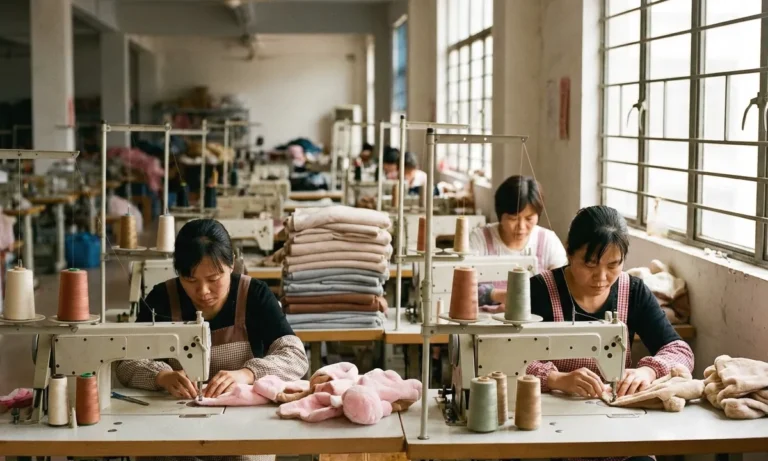
Most B2B buyers still source custom plush from China because the production ecosystem is deep: pattern rooms, sewing teams, fabric mills, accessory suppliers, export packers, and testing partners are close enough to solve problems quickly. Dongguan is one of the practical centers for this work, and it is where our factory operates.
Other countries can be suitable for large retail programs or sourcing diversification. For small and mid-size B2B programs, the practical difference is ecosystem depth: how quickly the supplier can source a specialty fabric, approve a lab dip, arrange testing, and correct a sample without sending every problem across several companies.
What matters more than the pin on the map is whether your supplier actually operates a factory there. Every cluster also hosts trading companies presenting factory photos that belong to someone else, which is why verification (below) is non-negotiable.
Where Do You Find Candidate Manufacturers?
Four channels produce nearly all B2B plush supplier discoveries, and they have different signal-to-noise ratios:
- B2B marketplaces (Alibaba, Made-in-China, Global Sources). The widest funnel and the noisiest. “Verified supplier” badges verify that a company exists, not that it owns a factory. Use marketplaces to build a long list, never to make a final choice.
- Trade shows. Major toy and sourcing fairs let you meet the team and handle sewn samples in person. That can compress weeks of email vetting into one focused conversation.
- Referrals. Other brand owners, crowdfunding creators, and licensing communities. The strongest signal available, because someone already paid the tuition.
- Direct search. Factories with real content (process video, facility tours, named staff) self-select for transparency. A supplier who shows you the production floor before you ask has nothing to stage later.
Build a long list of 10–20 candidates from any mix of these, and record the source of each. Referral candidates and trade-show candidates earn a head start in the next stage.
How Do You Shortlist From 20 Candidates to 3?
Send every candidate the same RFQ and let the responses do the filtering. Your RFQ should specify: artwork (front, back, side views), target size, target quantity, fabric preference, packaging spec, target market, and required certifications. Identical inputs are the only way to get comparable outputs.
Then score the responses on three things:
- Quote quality. An itemized quote (unit price ladder, sample fee, testing, packaging, freight terms) signals a factory that runs on process. A single bare number signals improvisation or hidden markup. We cover the full anatomy in what’s included in a quote.
- Question quality. Good factories ask about stuffing density, age grading, and tracking labels before quoting. A supplier who quotes your artwork without a single clarifying question is guessing, and the guess is padded.
- Response speed and clarity. Pre-sale communication is the best behavior you will ever see from a supplier. If it’s slow or vague now, production updates will be worse.
Cut anyone whose numbers sit far outside the benchmarks: a 10-inch custom plush at 500 units typically lands at $5–$7 per unit factory-direct. Quotes dramatically below that range have quietly downgraded the spec; quotes far above it are pricing in a middleman.
How Do You Vet the Final Candidates?
Vetting separates suppliers who answer with documents and video from suppliers who answer with reassurance. The checks that predict delivery are practical: MOQ fit, current batch-specific safety reports, realistic lead time, in-house pattern design, and whether the supplier will show the production floor when asked.
We’ve published the full checklist as its own guide: How to Choose a Custom Plush Manufacturer: 2026 Buyer’s Guide walks through all five checks with the exact questions to ask. The two-minute version:
- Demand a live video call from the production floor. Trading companies can’t produce one on demand. Factories can, and the good ones offer first.
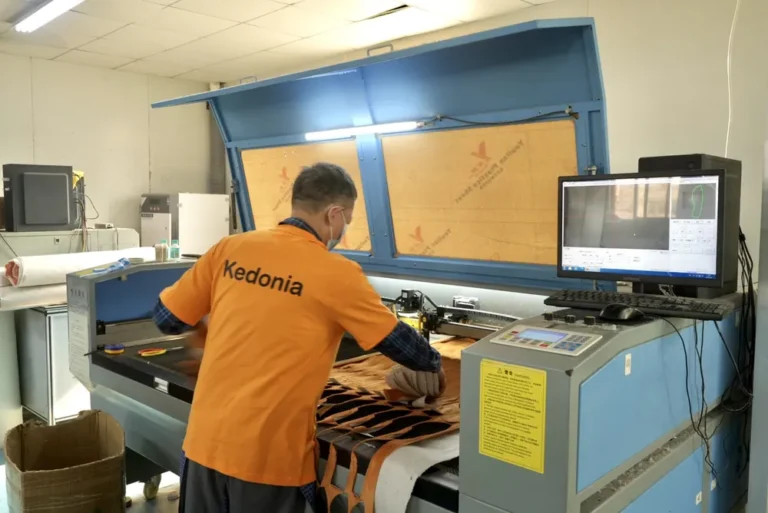
- Ask who makes the patterns. In-house pattern design is the single skill separating a manufacturer from a reseller. Ask to see the pattern team working; ours has 6 designers on staff.
- Verify testing per batch, not per company. A framed certificate from 2023 protects nobody. Your shipment needs its own reports, typically $150–$400 per standard per batch. The full regulatory map is in Plush Toy Safety Standards Explained.
Run all finalists through the same checks. Any single failure is a conversation; two or more failures is a verdict.
The Paid Sample Is the Real Interview
Everything before the sample is talk. The sample stage shows you, with your actual product, how the factory handles a brief, communicates progress, executes revisions, and hits dates. Sample fees run $150–$300 per design and are credited back on confirmed bulk orders of 3,000+ units, which makes sampling with your top two candidates a cheap final selection round.
Watch the process, not just the plush:
- Did they hold a scoping call and ask about feel, age range, and certification before cutting fabric?
- Did digital renders come for approval before sewing?
- Were revision requests executed accurately in one round, or did each change need re-explaining?
- Did the sample arrive when promised?
A factory that misses its own sample date will miss your bulk date. A factory that nails a 7–14 day sample build under no contractual pressure is showing you its real operating standard. The full walkthrough is in the custom plush sample process.
What Should the Contract and Terms Cover?
Before the deposit, six things belong in writing. None of them is exotic; all of them are skipped routinely by first-time buyers:
- Golden sample. The approved sample becomes the QC reference for bulk production. The contract should say so explicitly.
- Inspection standard. AQL 2.5 for general defects is the industry norm for plush. Name the standard, and book third-party inspection for a first order.
- Payment terms. 50% deposit to start production, 50% balance before shipment. Resist 100% upfront with an unproven supplier.
- Pattern and tooling ownership. If you paid for sampling, establish in writing whether you can take the pattern to another factory later. This clause costs nothing now and everything if the relationship sours.
- NNN agreement. Non-disclosure, non-use, non-circumvention, enforceable in China (Chinese law, Chinese jurisdiction). For original IP and licensed characters, this comes before artwork changes hands, not after.
- Tracking labels and compliance paperwork. US-bound orders need CPSIA tracking labels planned at sampling, plus a Children’s Product Certificate from your test reports.
A supplier who balks at any of these is telling you how disputes will go later. A professional factory has agreed to all six many times before.
Which Manufacturer Fits Your Buyer Type?
The right answer shifts with what you’re buying and how often:
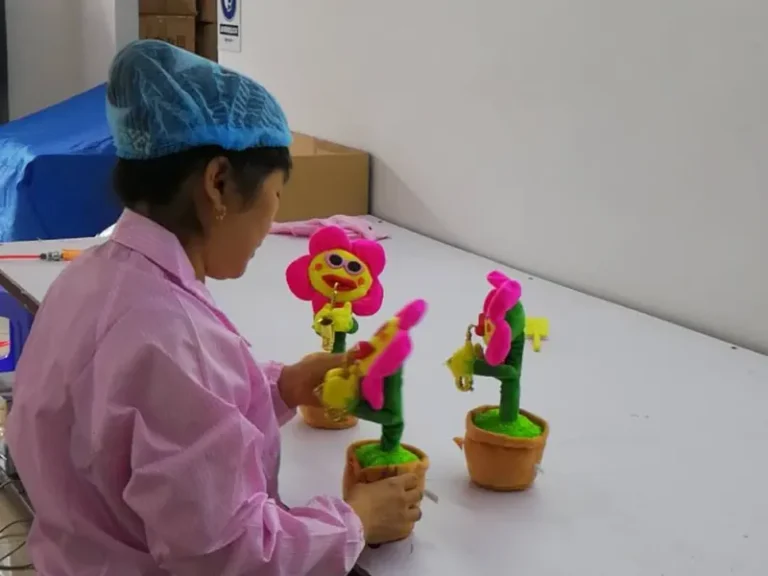
- Indie creators and crowdfunding. You need patient communication, MOQ honesty (real minimums start near 500 pcs), and a factory that treats a 500-unit first run as a future repeat customer, not a nuisance. Prioritize sample-process quality.
- Corporate gifts and promotional buyers. Dates are fixed and unmovable. Prioritize the lead-time conversation: sampling, bulk production, sea freight, and seasonal shutdowns must be discussed before the deposit.
- Retail and licensed programs. Compliance dominates. Prioritize per-batch testing fluency, tracking-label experience, FAMA where applicable, and capacity headroom. A factory running near its ceiling will deprioritize someone during peak season; make sure it isn’t you.
- E-commerce private label. Replenishment economics matter most. Once your pattern is locked and on file, repeat orders skip sampling entirely, so the factory’s pattern archive and reorder process are worth a direct question.
In every case the selection journey is the same: decide the supplier type, build a long list, filter with an identical RFQ, vet the finalists with documents, and let a paid sample make the final call.
Request a Factory-Direct Quote
The first step in making your order come to life. Request a free quote with your artwork, target quantity, and target market. We will return an itemized factory quote, and every vetting check in this guide is one we will answer with documents and video, not reassurances.
Frequently Asked Questions
Is a factory always better than a trading company?
Not always, but for one custom plush product at 500+ units, direct factory communication usually gives better control over sampling, cost, and QC. A trading company can still help when you are combining plush with unrelated product categories or need one party to manage several suppliers.
How many manufacturers should I get quotes from?
Build a long list first, then send the same RFQ to 3–5 serious candidates. That gives enough comparison without burying you in weak replies. Compare the quote structure, questions asked, and response clarity, then sample with the best two if the program risk justifies it.
How long does choosing a manufacturer take?
RFQ and vetting time depends on how complete your artwork and brief are. Once you choose a finalist, sampling normally takes 7–14 days, about 20 days door to door. After approval, bulk production takes 25–45 days, sea freight takes 25–35 days, and the factory-to-warehouse plan usually fits 10–14 weeks.
Do I need an NNN agreement for custom plush?
For original characters and licensed IP, yes, before artwork changes hands. Use an NNN covering non-disclosure, non-use, and non-circumvention, drafted for enforceability where the supplier operates. The practical point is simple: protect the design before sampling, not after the factory has already engineered it.
What is a golden sample?
The golden sample is the final approved pre-production sample, locked as the QC reference for the entire bulk run. Production units are inspected against it, with final inspection normally using AQL 2.5. Put that clause in writing before paying the bulk deposit.
Can I move my design to a different factory later?
Only cleanly if pattern ownership was settled in writing at the start. If the contract is silent, the factory that engineered the pattern has a defensible claim to it, and you may be re-paying for pattern development at the new supplier.
About the Author
Kyo Lue — General Manager, The Plush Maker
Kyo runs The Plush Maker from the factory side in Dongguan, where supplier promises are tested by sample quality, pattern control, QC records, production capacity, and export timing. His selection advice is written from the position of a factory manager who expects buyers to verify the claims he makes.