Four plush fabric types cover most custom plush production: minky, velboa, short pile, and long pile. All are polyester knits; what differs is pile height and density, and those two variables decide how the toy feels, how well it holds detail, and how it behaves on the sewing line.
Here’s the part most buyers get backwards: fabric choice moves your quote less than you think. Materials in total are 25–35% of unit cost, and the gap between fabric grades inside that share is small. Choose fabric for the product, not the price. The Plush Maker is an owned plush factory in Dongguan, manufacturing custom plush since 1998; this comparison reflects what each fabric does on our lines. It’s a spoke of our factory process guide.
Key Takeaways
- Minky = softest touch, the default for premium and gift plush. Velboa = lowest pile, sharpest embroidery and print detail.
- Long pile sells fur realism but hides seam detail and sheds at cut edges; it needs different handling at cutting and sewing.
- Fabric is inside the 25–35% materials share of unit cost — switching grades changes a quote far less than adding panels or embroidery does.
- Every fabric is color-matched per order via lab dips, because dye lots vary; the swatch you approve is the contract.
What Are the Main Plush Fabric Types?
| Fabric | Pile height | Feel | Detail fidelity | Best for |
|---|---|---|---|---|
| Minky | ~1–5 mm, dense | Ultra-soft, “melts” | Good | Premium plush, baby products, gift lines |
| Velboa | ~2–3 mm, low | Smooth, slightly firm | Excellent | Embroidery-heavy faces, printed plush, mascots |
| Short pile | ~3–7 mm | Classic plush feel | Good | General character plush, keychains, promos |
| Long pile | 10–30+ mm | Furry, realistic | Poor (pile swallows detail) | Animal realism, fashion plush, display pieces |
Most projects land on minky or short pile by default. The interesting decisions happen at the edges: velboa when the face carries the design, long pile when the brief says “looks like real fur.”
Why Is Minky the Default for Premium Plush?
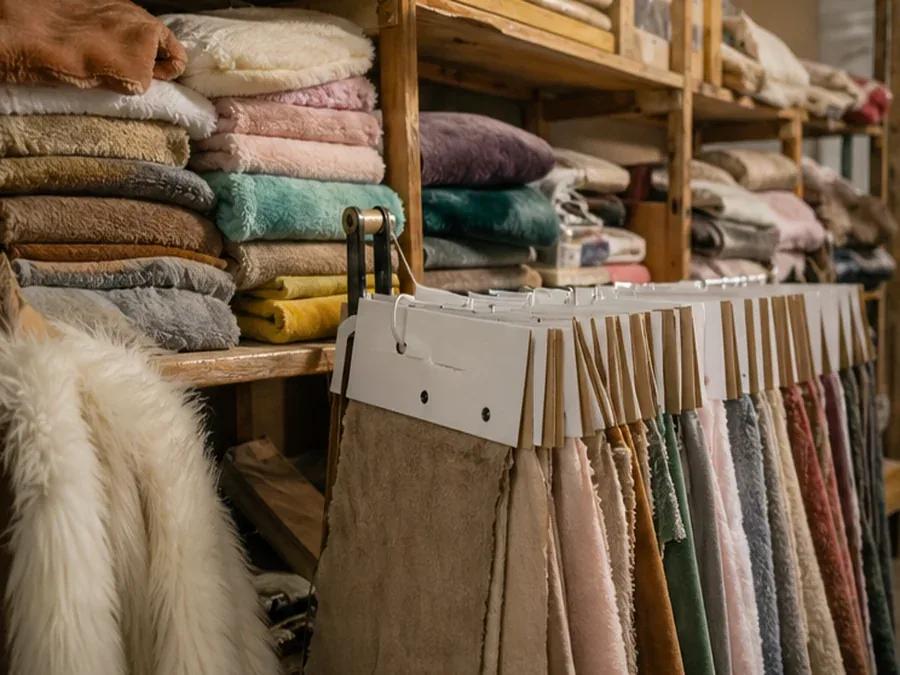
Minky is a dense microfiber knit with a short, fine pile, and it wins on the variable that sells plush at retail: hand feel. When a buyer picks up two otherwise identical samples, the minky one reads as the more expensive product almost every time.
It embroiders well, seams cleanly, and takes solid dye colors with a soft sheen. Its main constraints are practical: the dense pile means seam allowances need care so fill doesn’t read through, and embossed or sculpted minky variants (dot minky, rose minky) raise snag risk on dense embroidery. For ages 0–3 products, minky’s fiber security under wash testing is a known quantity, which simplifies compliance.
When Should You Choose Velboa Instead?
Choose velboa when the design lives in the details. Its low, even pile is the closest thing plush has to a flat canvas: embroidery sits crisp on the surface, screen prints and sublimation hold edges, and small features that would sink into minky stay legible.
That’s why mascots, branded promo plush, and anything with logos or fine facial linework default to velboa. The trade-off is touch — velboa feels smooth rather than plush, noticeably firmer than minky. For a corporate mascot handed out at a trade show, that trade is correct; for a gift-shop comfort plush, it usually isn’t.
Velboa is also the most forgiving fabric on the line: stable to cut, predictable to sew, consistent across dye lots. When timelines are tight, that boring reliability has real value.
What Does Long Pile Buy You — and What Does It Cost You?
Long pile (10–30+ mm) is the only way to get genuine fur realism, and for display plush, fashion collabs, and realistic animals it’s the right call. But it changes the manufacturing math in three ways buyers should know before committing.
First, detail disappears: seams, small appliqués, and shallow embroidery sink into the pile, so designs need bolder features. Second, cutting is different — long pile is cut from the backing side, stroke by stroke, to avoid shearing the fur, which adds handling time. Third, edges shed until they’re sewn in, so the line runs slower and cleanup is constant. None of this makes long pile expensive in materials terms; it makes it expensive in minutes, and minutes are the 40–50% labor block.
A common professional compromise: long pile body, velboa or minky face panel. You keep the fur read at arm’s length and the face detail up close.
How Does Fabric Choice Affect Your Quote?
Less than panel count, less than embroidery density, less than size. Materials as a whole run 25–35% of unit cost, and fabric is only part of that share alongside fill, eyes, labels, and packaging. Moving from short pile to minky might shift a quote by cents; redesigning a 28-panel character down to 16 panels shifts it by a lot more, because labor is the dominant cost block.
Where fabric does move money is indirectly: long pile’s slower handling shows up as labor, specialty fabrics below MOQ-scale yardage can carry dye-lot minimums, and licensed-spec fabrics with tight color tolerances add lab-dip rounds. Ask for the fabric line on an itemized quote and the effect stops being mysterious.
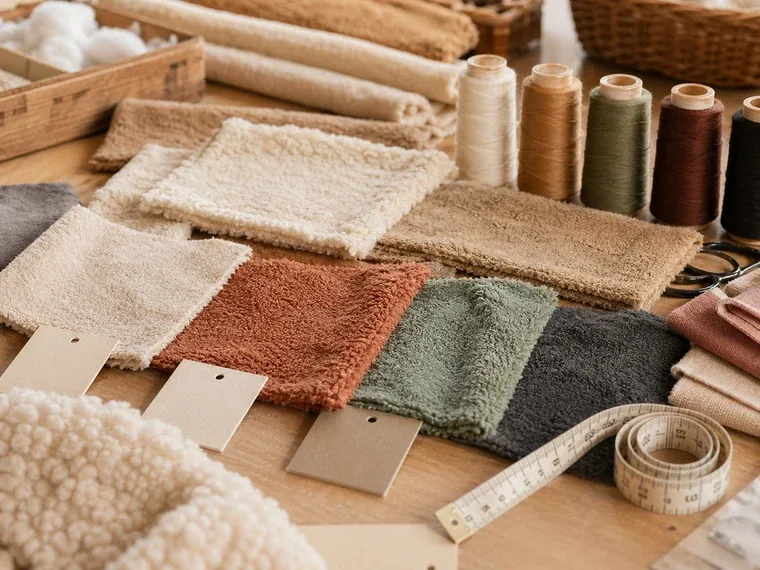
One practical rule: never spec fabric from a photo. Approve a physical swatch, and treat the lab dip you sign as the color contract for the run — dye lots vary, and per-order color matching is how the variance gets controlled.
Which Fabric Should Your Product Use?
Match the fabric to the job the plush does:
- Gift, comfort, baby, premium retail → minky. Touch is the purchase trigger.
- Mascots, promos, logo-heavy or print-heavy designs → velboa. Detail is the purchase trigger.
- General character plush, keychains, mid-market retail → short pile. The balanced default.
- Realistic animals, display and fashion pieces → long pile, ideally with a low-pile face panel.
If you’re undecided, sample both candidates — sample fees are $150–$300 per design and credited back on bulk orders of 3,000+ units, so a two-fabric A/B at sample stage is cheap insurance against a 5,000-unit regret. The sample workflow is in our sample process guide.
Request a Factory-Direct Quote
The first step in making your order come to life. Request a free quote with your artwork and target quantity — tell us where the product will sell, and we’ll recommend the fabric with swatches to prove it.
Frequently Asked Questions
What fabric are most plush toys made of?
Polyester pile knits — minky, velboa, short pile, or long pile — cover the vast majority of custom plush. All are polyester; the differences are pile height and density, which set feel, detail fidelity, and line handling. Cotton and wool appear only in niche natural-fiber products.
Is minky or velboa better for custom plush?
Minky wins on softness and perceived value; velboa wins on embroidery and print detail. Premium and gift plush usually default to minky, while mascots and logo-heavy designs often use velboa. Many production designs combine both: a minky body for touch and a velboa face panel for clean detail.
Does fabric choice change the price much?
Not much. Materials in total are 25–35% of unit cost and fabric is only part of that. Panel count and embroidery density move quotes far more, because sewing labor is 40–50% of cost. Long pile’s effect shows up as slower handling, not pricier yardage.
Can I see the fabric before bulk production?
Yes, and you should insist on it. Approve physical swatches and a per-order lab dip before sampling; the signed lab dip becomes the color standard for the bulk run. We keep that swatch with the golden sample so QC can compare the actual fabric, not a screen photo.
About the Author
Kyo Lue — General Manager, The Plush Maker
Kyo works directly with The Plush Maker’s material suppliers, sampling team, pattern room, and QC staff in Dongguan. His fabric advice comes from what actually happens in production: cutting behavior, embroidery clarity, seam handling, color approval, and bulk consistency.