Custom plush product types range from compact merchandise pieces to oversized display plush. They may use the same factory backbone, but they are different products with different cost structures, compliance questions, freight issues, and failure points. Choosing the right product type is the decision that shapes every other one.
The Plush Maker is an owned plush factory in Dongguan, manufacturing custom plush since 1998 at a capacity of roughly 300,000 units per month — and that volume spreads across every category below. This is the hub guide to plush product types: what each one is for, what it costs relative to the others, and the trap each category hides. The manufacturing process behind all of them is covered in its own pillar guide; safety and testing requirements still need to be checked against the destination market and age grade.
Key Takeaways
- Product type is a program decision, not a size decision: a keychain is a volume-and-attachment product, a mascot is a likeness product, a giant plush is a freight product.
- The 15–40 cm standard plush is the reference category: 10-inch at 500 units runs $5–$7, and every other type prices off that anchor.
- Small formats multiply hardware questions (clasps, rings); big formats multiply freight cube; weighted formats multiply fill-spec discipline.
- All categories share one factory backbone: pattern, golden sample, AQL inspection, and batch testing don’t change with size.
What Are the Main Custom Plush Product Types?
Six categories cover nearly every B2B plush program we quote:
| Type | Typical size | Primary use | Relative unit cost | Watch out for |
|---|---|---|---|---|
| Plush keychains & bag charms | 8–15 cm | Merch, blind-box, impulse retail | Lowest | Attachment hardware compliance |
| Standard custom plush | 15–40 cm | Retail, brand merch, IP licensing | Baseline ($5–$7 at 10″/500 pcs) | The reference category — fewest surprises |
| Mascot plush | 20–40 cm | Sports teams, universities, corporate brands | Baseline to + | Likeness accuracy across angles |
| Giant & display plush | 60 cm–2 m+ | Retail display, prizes, flagship merch | High, freight-dominated | Shipping cube, not unit cost |
| Weighted & sensory plush | 20–40 cm, 0.5–2 kg | Wellness, therapeutic retail | + (fill cost & spec) | Fill containment and weight tolerance |
| Plush accessories | varies | Pillows, slippers, backpack clips, golf covers | varies | Category-specific function specs |
The instinct to read this table by size is the mistake. Read it by what dominates the cost and risk. A keychain program lives or dies on hardware and per-unit pennies. A giant plush program lives or dies on the freight calculation. A mascot program lives or dies on whether the embroidered face actually looks like the team’s character. Same sewing lines; entirely different management problems.
When Do Plush Keychains Make Sense?
When the job is reach: trade-show giveaways, merch tables, blind-box programs, checkout-counter impulse buys. A keychain compresses your character into 8–15 cm, adds a clasp or ring, and gets the unit cost low enough to give away or retail at pocket-money prices. Because the per-unit price is small, programs typically run at higher quantities than the 500-piece MOQ — the math rewards it, since moving from 500 to 2,000 units cuts unit cost 30–40% across all plush categories.
Two things change at this scale. First, the design must survive shrinking: a character with fine facial detail at 30 cm becomes an embroidery smudge at 10 cm, so keychain patterns simplify features deliberately. Second, the metal hardware becomes a compliance object — a clasp is an attached rigid part, which pulls in tension testing and pushes keychains toward an adult/teen merch grading rather than a young-children’s toy.
What Defines the Standard Custom Plush Category?
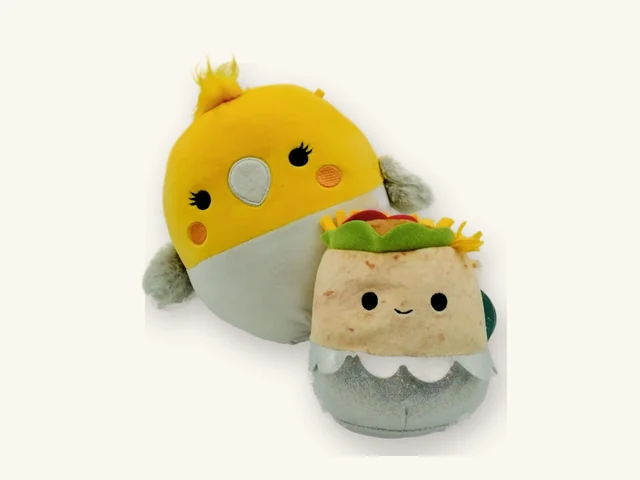
The 15–40 cm shelf plush is the center of gravity of the industry, and the category every figure on this site anchors to: a 10-inch plush at 500 units runs $5–$7 each, labor is 40–50% of that cost, and the full first-order cycle takes 10–14 weeks. It’s the default for retail programs, brand merchandise, and licensed characters — large enough for expressive faces and fabric contrast, small enough to ship efficiently polybagged.
This is also the category where the supporting decisions do the differentiating: fabric choice sets the feel, stuffing spec sets the body, and packaging tier sets the shelf presence. If your program targets ages 0–3, under-3 safety rules reshape the face and fill before anything else is decided.
For a complete cost walkthrough of this category, the pricing guide covers the program level and the seven cost drivers cover the unit level.
What Makes Mascot Plush Different From Standard Plush?
The reference isn’t your imagination — it’s an existing character that thousands of fans already know by heart. A mascot plush is judged on likeness: the exact PMS-matched fur color, the logo placement, the specific expression the costume version wears. The manufacturing is standard; the approval discipline is not. Mascot programs spend their revision rounds on the face, and the golden sample matters even more than usual because “close” is visible from the stands.
The buyers are different too: sports teams, universities, museums, and corporate brands ordering against a style guide, often with licensing sign-off layered on top of factory approval. That second approval chain is the schedule risk to plan for — our 3-revision-round sample process is usually plenty, but the licensor’s calendar isn’t ours to compress.
Why Are Giant Plush Priced by the Container, Not the Unit?
Past roughly 60 cm, plush economics invert. The sewing cost rises with size, but the number that takes over the quote is cube: plush is light and bulky, so a container fills by volume long before it fills by weight. That is why giant plush is a low-quantity, high-impact category for store displays, arcade prizes, and flagship photo-op pieces rather than a volume retail product.
Practical consequences we walk buyers through: giant pieces often ship vacuum-compressed or under-stuffed with fill added at destination; the packaging decision is really a freight decision; and the per-unit price quote means little until the landed cost is computed. Order quantities here are often below our usual minimums as add-ons to a standard-plush program — a display piece riding along with the container of retail units it advertises is the configuration that makes everyone happy.
What Do Weighted and Sensory Plush Require?
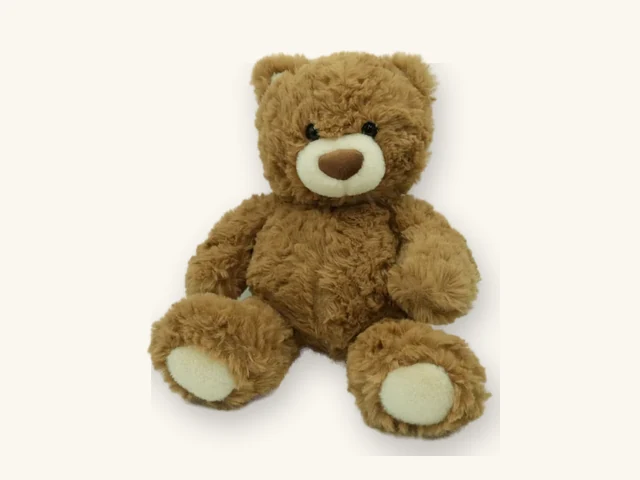
Precision. A weighted plush carries 0.5–2 kg of fill — glass microbeads or pellets concentrated in the base and limbs — and sells on how that weight feels and distributes. The wellness and sensory-support market that grew this category is also a market that reads specs: buyers ask for exact weights, and a batch that varies noticeably unit-to-unit generates returns the way a crooked face never would.
Manufacturing-wise this is the most spec-driven plush type we make. The weighted fill always sits in sealed, compartmentalized inner pouches — the same construction rule as ordinary pellet fill, applied with more at stake — and the spec sheet states total weight, weight by zone, and tolerance. Compliance attention also rises: a heavy fill escaping a seam is a serious failure, so seam engineering and batch testing get extra scrutiny, and most weighted programs sensibly grade out of the under-3 bracket.
Which Product Type Fits Your Program?
Start from the job, not the toy:
- Maximizing reach per dollar (events, blind-box, merch drops) → keychains, at quantity.
- Retail shelf or licensed line → standard 15–40 cm plush, the category with the most mature math.
- Representing a brand or team → mascot plush; budget calendar time for the likeness approvals.
- Stopping foot traffic → giant display plush, costed as freight, ordered alongside the retail units.
- Wellness/sensory positioning → weighted plush, with the spec discipline that implies.
- Crowdfunded character merch → standard plush mechanics with a campaign-shaped timeline.
Whatever the category, the backbone is identical: a pattern built by the same team of six, a sample at $150–$300 credited back on bulk orders of 3,000+ units, a golden sample locked before production, AQL 2.5 inspection before shipment, and batch testing matched to your market. Product types change what we build; they never change how carefully we build it. And one calendar rule spans them all: factories close for Chinese New Year, so a Q2 launch in any category means booking by October.
Request a Factory-Direct Quote
The first step in making your order come to life. Request a free quote with your artwork, target quantity, and target market — and if you’re unsure which product type fits, send the goal instead and we’ll recommend the format. Mixed programs (retail plush + keychains + one display piece) quote together and ship together.
Frequently Asked Questions
What sizes do custom plush toys come in?
From 8 cm keychains to display pieces over 2 meters. The retail standard is 15–40 cm; a 10-inch (25 cm) plush at 500 units runs $5–$7 each. Below 15 cm, designs must simplify to survive the scale; above 60 cm, freight volume starts dominating the cost.
Is the MOQ the same for every plush product type?
The baseline MOQ is 500 pieces across categories. In practice, keychains run at higher quantities because the low unit price rewards volume pricing (500→2,000 units cuts unit cost 30–40%), while giant display pieces are often ordered in small numbers as add-ons to a standard-plush program.
Are mascot plush more expensive than standard plush?
The manufacturing cost is similar — the same materials and labor structure applies. The real difference is process: mascot programs spend more revision attention on likeness (PMS-matched colors, exact expressions) and often carry a second approval chain through the brand or licensor, which affects timeline more than price.
Why do giant plush cost so much to ship?
Plush is light but bulky, so containers fill by volume, not weight. Large pieces can take freight space far out of proportion to their sewing cost. Giant plush programs are costed on landed cost per unit, and often ship vacuum-compressed or partially stuffed to control the cube.
What’s special about manufacturing weighted plush?
Weight is the product, so the spec is strict: total weight, distribution by zone, and tolerance, with glass beads or pellets sealed in compartmentalized inner pouches. Seam engineering and batch testing get extra scrutiny, and most weighted programs grade out of the under-3 age bracket.
About the Author
Kyo Lue — General Manager, The Plush Maker
Kyo works with The Plush Maker’s sampling, production, QC, and export teams in Dongguan on many plush product formats, from compact merchandise to oversized display pieces. His advice comes from quote reviews, sample revisions, freight planning, and the factory decisions that make each product type practical.